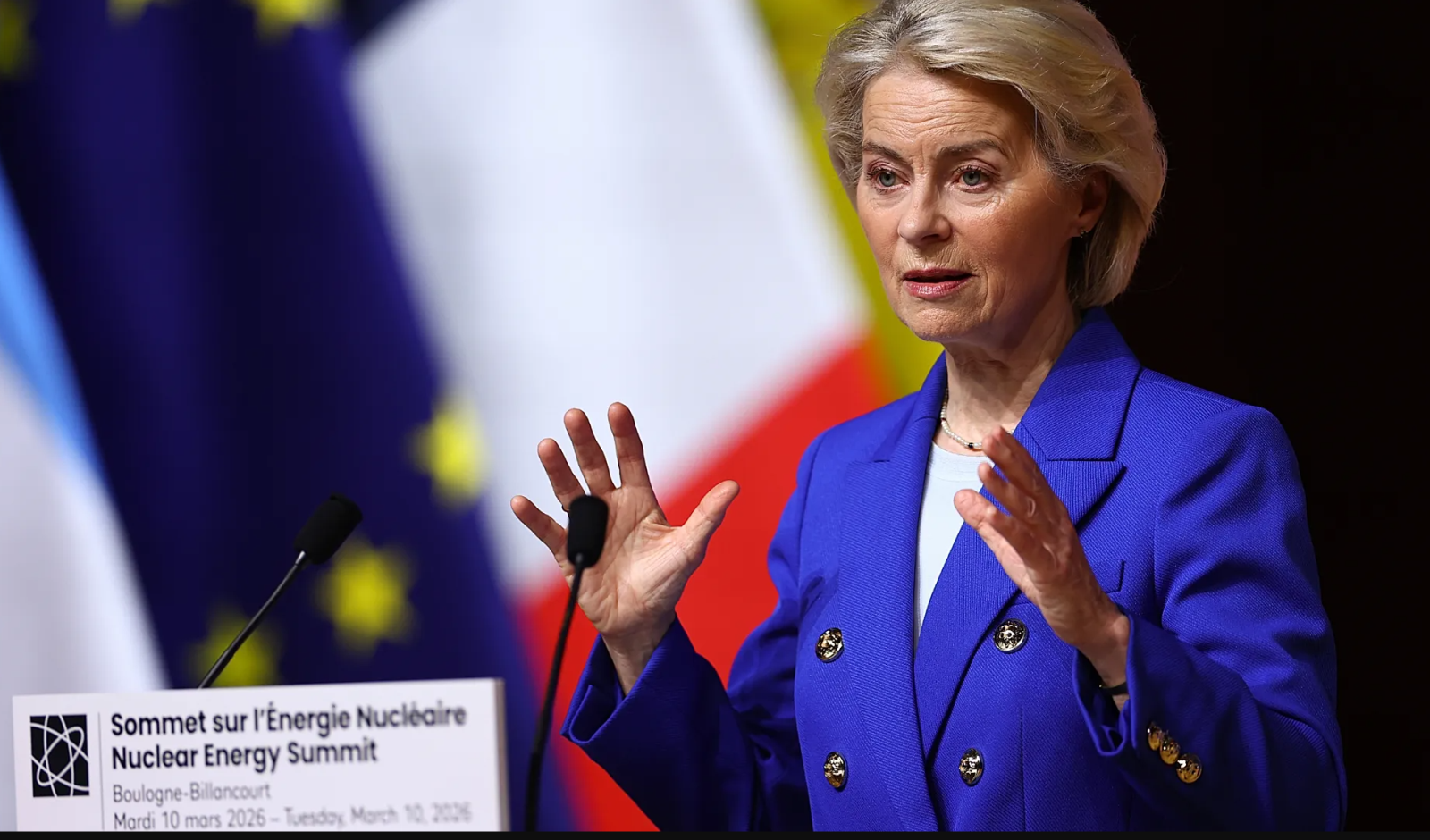
In a message to EU leaders, Commission president Ursula von der Leyen made clear that the bloc's emissions trading system (ETS) will remain intact, despite growing demands from several member states to suspend or overhaul the scheme.
Countries including Italy, Hungary and the Czech Republic have argued that the combined burden of carbon pricing and high electricity costs is eroding industrial competitiveness, particularly in energy-intensive sectors. Some governments have warned of factory closures and investment flight if relief is not provided.
But Brussels appears unwilling to compromise on what it sees as a cornerstone of its climate strategy. The ETS, which requires companies to pay for their emissions, is viewed by the Commission as a central driver of both decarbonisation and long-term investment in clean technologies.
In her communication, von der Leyen described the system as a reliable framework that provides predictability for markets while incentivising innovation. Revenues generated from carbon pricing, she noted, are already being channelled into renewable energy, storage and other low-carbon infrastructure.
The stance aligns with a group of member states including Denmark, Sweden and the Netherlands, which have cautioned against short-term political interventions that could undermine investor confidence and delay the energy transition.
Instead of altering the carbon market, the Commission is pushing governments to act at national level. Member states retain significant control over electricity taxation and pricing structures, and Brussels is encouraging them to use that flexibility to ease pressure on consumers.
Proposals include temporary tax reductions on electricity, targeted state aid for vulnerable industries and compensation mechanisms to offset indirect carbon costs. The aim is to lower bills without distorting the internal market or weakening incentives to move away from fossil fuels.
The debate has been sharpened by renewed volatility in global energy markets, driven in part by geopolitical tensions affecting key supply routes. As fossil fuel prices rise, electricity costs across Europe have followed, intensifying calls for intervention.
At the same time, the Commission is preparing adjustments to the ETS itself. A review expected in the coming months will seek to align the system with the EU's longer-term climate targets, including a 2040 milestone linked to its commitments under the Paris Agreement.
One area under particular scrutiny is the Market Stability Reserve, a mechanism designed to smooth fluctuations in carbon prices. Officials believe refining this tool could help contain volatility without fundamentally altering the structure of the market.
Climate commissioner Wopke Hoekstra has indicated that work on the reserve could move quickly, though broader reforms will require more detailed negotiation.
Not everyone is convinced the Commission's approach goes far enough. Krzysztof Bolesta described the proposals as lacking concrete measures, reflecting wider frustration among governments seeking faster relief.
Others, however, argue that weakening the carbon market would be a strategic mistake. Bernd Weber, head of the EPICO thinktank, said maintaining a strong price signal is essential to guide investment and prevent carbon leakage, particularly in sectors such as chemicals and heavy industry.
As EU leaders prepare to meet, the dispute highlights a deeper tension at the heart of Europe's energy transition: how to balance the immediate political pressure of high costs with the long-term imperative of cutting emissions.
For now, the Commission is betting that the answer lies not in retreating from carbon pricing, but in reinforcing it—while asking national governments to carry more of the burden in the short term.