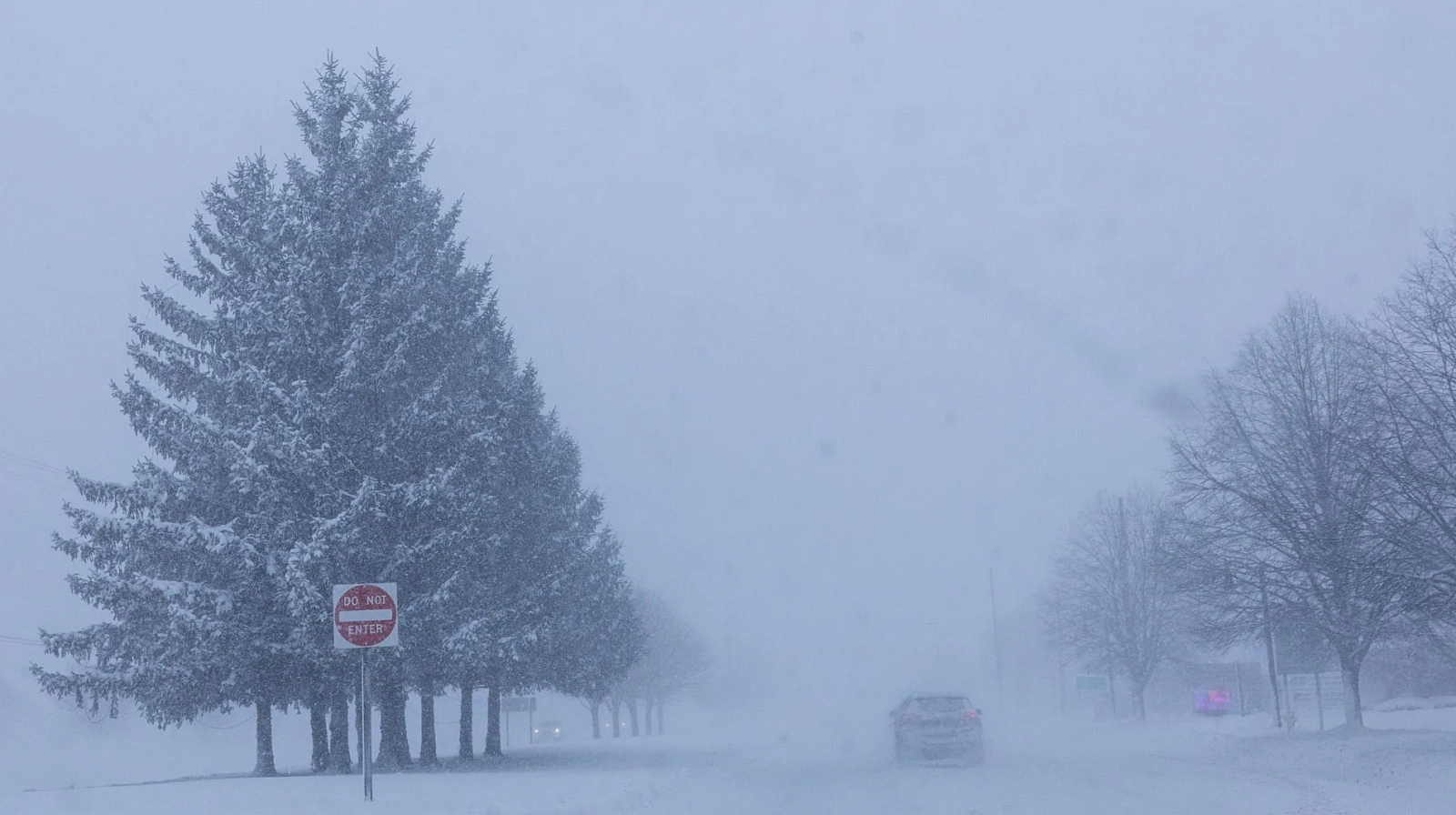
Meteorologists say unusually warm Arctic waters combined with deeply chilled continental land masses are stretching the polar vortex, allowing frigid air to spill far south. The result: widespread subzero temperatures, heavy snowfall and dangerous ice storms expected to impact millions over the coming days.
Forecast models indicate the system will begin sweeping across the US on Friday, extending from New Mexico to New England and reaching deep into southern states. Around 230 million people are expected to experience temperatures below minus 7°C, while roughly 150 million could face snow or ice — with many regions likely to see both.
Weather experts warn that this is not a short-lived event. The cold is forecast to linger through late January and into early February, meaning accumulated snow and ice may persist for weeks.
Former NOAA chief scientist Ryan Maue, now working in private forecasting, said the severity of the outbreak is being underestimated.
"The atmospheric pattern is locked in," he said. "This isn't just a North American issue. Eastern Europe through Siberia is also experiencing exceptional cold. Much of the Northern Hemisphere has slipped into a deep freeze."
What's driving the cold outbreak?
At the heart of the event is a distorted polar vortex — a vast pool of Arctic air that usually remains confined to high latitudes. This time, waves in the upper atmosphere have elongated the system, pushing icy air southward.
That cold air is colliding with moisture streaming in from both the Pacific and the Gulf of Mexico, creating the conditions for widespread snowstorms and hazardous ice.
Scientists say the origins trace back to the Arctic, where rising temperatures are adding energy to the atmosphere and weakening traditional weather boundaries. As sea ice retreats, especially in parts of the Barents and Kara seas, atmospheric patterns become more unstable, making these southward cold surges more likely.
Winter climate specialist Judah Cohen, an MIT-affiliated researcher, said signals of this event began forming months ago. Low Arctic sea ice and heavy Siberian snowfall in autumn helped set the stage for a stretched polar vortex.
"These factors effectively loaded the dice," Cohen explained, increasing the chances of severe winter outbreaks across central and eastern North America.
Recent research co-authored by Cohen has linked the growing frequency of elongated polar vortex events to intense winter cold spells over the past decade. The Arctic is warming faster than any other region on Earth, accelerating sea ice loss and altering jet stream behaviour.
Data show Arctic sea ice is currently at a record low extent for this time of year.
Regions bracing for the worst
By Friday morning, the core of the polar vortex is expected to sit over northern Minnesota, unleashing what forecasters describe as sustained, punishing cold. Temperatures across parts of the Midwest and northern Plains could fall to between minus 32°C and minus 34°C.
Average overnight lows across the contiguous US are projected to hover near minus 12°C through the weekend and early next week.
Forecasters also say Lakes Erie and Ontario may partially freeze, potentially reducing lake-effect snow but underscoring the intensity of the cold.
The bitter air mass is expected to affect most areas east of the Rocky Mountains. Freezing rain could stretch from the southern plains through the mid-South and into the Carolinas, raising the risk of widespread power outages and significant tree damage.
In other regions, heavy snowfall is likely, with notable accumulations possible across the Ozarks, Tennessee and Ohio valleys, the central Appalachians, the mid-Atlantic and parts of the northeast.
Some areas along the US East Coast could even face back-to-back blizzard conditions within the next two weeks.
As climate change continues to warm the Arctic while land masses cool rapidly in winter, scientists warn that these extreme contrasts are becoming more common — reshaping winter weather patterns and increasing the likelihood of disruptive cold events across much of the Northern Hemisphere.