
Climate Change Emerges as a Major Risk to Spain’s ‘Resilient’ Economy
Spain’s economy has shown strong recovery and growth in recent years, but new analysis warns that climate change is rapidly becoming one of its most significant long-term threats.
A report by the Organisation for Economic Cooperation and Development (OECD) highlights that, despite outperforming many European counterparts in GDP growth, Spain is among the countries most vulnerable to climate-related risks.
Strong Growth Meets Rising Climate Risks
Following a slow rebound from the COVID-19 pandemic, Spain has experienced steady economic expansion, supported by tourism, EU recovery funds, and increased public spending. However, this positive trajectory is increasingly at risk.
The OECD cautions that rising temperatures, more frequent droughts, severe floods, heatwaves, and wildfires are placing mounting pressure on Spain’s economy, environment, and public health. Strengthening resilience will require targeted investments in climate adaptation and more robust infrastructure.
Economic Losses Set to Climb
Climate-related disasters are already taking a measurable toll. Experts estimate that extreme weather events caused approximately €12.2 billion in damages in 2025 alone, with projections suggesting losses could rise to €34.8 billion by 2029.
Flooding has emerged as one of the most destructive hazards, exacerbated by urban expansion into high-risk areas. Recent storms along the Mediterranean coast triggered widespread disruption, with flash floods inundating cities, halting transport networks, and stranding residents and tourists alike.
These events follow even more devastating floods in Valencia the previous year, which resulted in hundreds of fatalities after record-breaking rainfall overwhelmed infrastructure.
Heatwaves and Wildfires Intensify Pressure
Rising temperatures are also affecting public health and economic productivity. Spain experienced its hottest summer on record in 2025, with average temperatures exceeding 24°C and peaks nearing 46°C.
Such extreme heat not only increases health risks but also reduces labor productivity, particularly in urban areas. Experts stress the need to better integrate heat adaptation strategies into city planning and building standards.
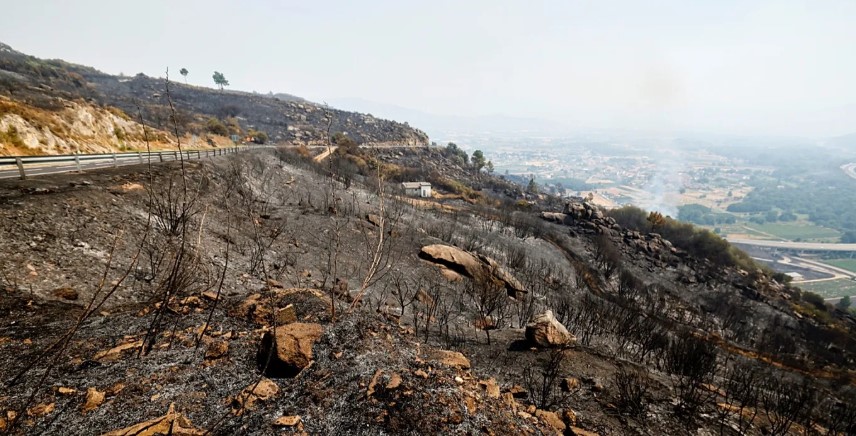
High temperatures, combined with dry and windy conditions, have also intensified wildfire activity. Since the beginning of the year, fires have burned more than 380,000 hectares—far above the annual average—and resulted in multiple fatalities.
Scientists note that the climatic conditions driving these fires are now significantly more likely and more intense due to human-induced climate change.
Progress in Renewable Energy, but Challenges Remain
Despite these challenges, Spain has made notable progress in expanding renewable energy. Solar and wind power now account for over half of the country’s electricity generation, putting it on track to meet decarbonisation targets.
However, rising energy demand—expected to increase by more than 40% by 2030—poses new challenges. The OECD emphasizes the need for continued investment in grid infrastructure, energy storage, and interconnection capacity to support this transition.
At the same time, emissions from the transport sector remain a concern. Increased vehicle ownership and insufficient incentives to shift toward cleaner alternatives have slowed progress in reducing transport-related emissions.
A Critical Moment for Action
The report makes clear that while Spain’s economy has demonstrated resilience, its future growth will depend on how effectively it addresses climate risks.
Without stronger mitigation and adaptation efforts, the country’s economic gains could be undermined by increasingly frequent and severe climate impacts—turning environmental challenges into a central economic issue.