
Climate Change Intensifies Greek Storms, Making Them Wetter and More Destructive, Study Finds
Severe storms that recently hit Greece were significantly intensified by climate change, making them wetter and more damaging than similar events in the past, a new study has concluded.
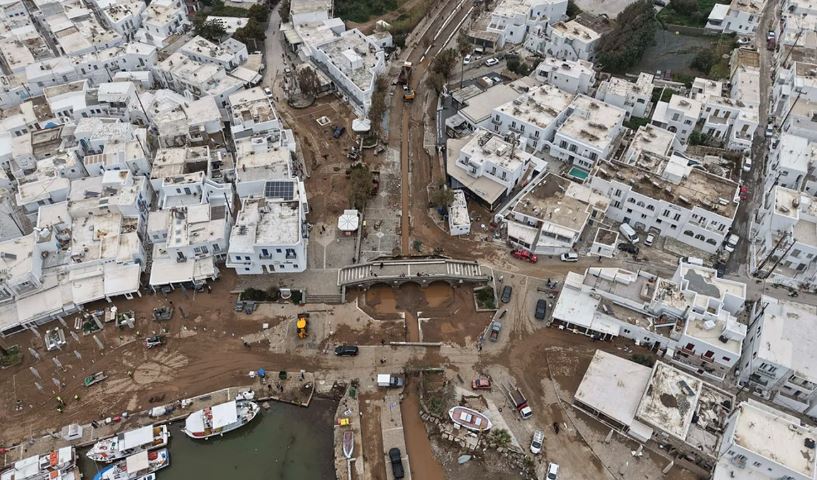
The research indicates that storms of this kind now produce up to 15 percent more rainfall compared to earlier decades. Scientists say this increase is largely linked to human-driven global warming, which is raising sea surface temperatures and fueling more extreme weather across the Mediterranean region.
In late March, islands including Paros and Mykonos were battered by intense rainfall and hailstorms. Streets were flooded, vehicles were swept away, and authorities were forced to shut down schools and limit movement to emergency services. Residents and tourists were urged to stay indoors as rescue teams responded to the situation.
The severe weather continued into early April, with Crete among the hardest-hit areas. In the city of Chania, record-breaking rainfall over a 24-hour period led to widespread flooding. Other islands, such as Rhodes, also experienced strong winds and significant damage.
The findings come from a rapid attribution study conducted by ClimaMeter, which analyzed 74 years of meteorological data from the Copernicus Earth monitoring service. Researchers compared similar weather systems from the period between 1950 and 1986 with those observed from 1987 to 2023, when the effects of climate change have become more pronounced.
Their analysis shows that storms like the recent Greek event are now producing up to 5 millimeters more rainfall per day than they would have in the past. While natural climate patterns such as El Niño may have played a partial role, scientists concluded that the primary driver behind the increased intensity is human-induced climate change.
Experts say that although linking individual weather events directly to climate change remains complex, the broader trend is evident. Rising global temperatures are contributing to more frequent and more destructive storms. They stress the need for both reducing greenhouse gas emissions and improving infrastructure and preparedness in vulnerable regions like the Mediterranean.