
Climate Crisis Deepens as Political Will Falters: Key Moments from 2025
The year 2025 underscored a stark contrast between accelerating climate impacts and inconsistent political action. As global temperatures continued to rise, efforts to address climate change struggled to keep pace, marking a turbulent period for both the planet and international climate governance.
A Decade of Record Heat
Scientific data released throughout the year painted a troubling picture. According to the World Meteorological Organization, the past eleven years have been the warmest ever recorded. Early projections suggest that 2025 will rank among the top three hottest years in history.
Further analysis from the Copernicus Climate Change Service indicates that the last three years have likely exceeded the 1.5°C warming threshold established by the Paris Agreement. This trend is largely driven by record-high concentrations of greenhouse gases, primarily generated through fossil fuel use, deforestation, and intensive agricultural practices. These emissions trap heat in the atmosphere, intensifying global warming.
Diverging Global Policies
Climate policy developments in 2025 reflected a fragmented global response. In the United States, President Donald Trump reinstated policies favoring fossil fuel expansion, including lifting restrictions on liquefied natural gas (LNG) exports. He also reignited controversy by dismissing climate change as a “con job” and criticizing renewable energy as costly and ineffective.
Meanwhile, China showed signs of stabilizing emissions. Although still the world’s largest emitter, recent analyses suggest its carbon output has plateaued or declined over the past 18 months, supported by reduced emissions in key industrial sectors and rapid expansion of renewable energy capacity.
In Europe, climate policymaking faced internal contradictions. While the European Union confirmed a legally binding target to cut emissions by 90% by 2040 compared to 1990 levels, it simultaneously softened plans to phase out internal combustion engine vehicles by 2035. Regulatory reforms under the Omnibus I package also drew criticism for weakening environmental standards and complicating the bloc’s climate ambitions.
COP30: Limited Progress, New Alliances
The COP30 climate summit in Brazil delivered mixed results. While it provided a more open environment for civil society engagement compared to previous years, it failed to produce substantial progress toward global climate targets. Independent assessments described the outcome as disappointing, noting a continued lack of measurable improvement in projected warming trajectories.
However, a notable development was the emergence of smaller coalitions among climate-ambitious countries, signaling a potential shift away from traditional consensus-based negotiations.
Accelerating Environmental Changes
Beyond political developments, physical changes to the planet intensified. Glaciers worldwide continued to retreat at unprecedented rates, with scientists warning of an approaching period of “peak glacier loss.” Venezuela officially lost its last glacier, while projections suggest that Central Europe could retain only a fraction of its current glaciers by the end of the century.
In Greenland, the melting season began earlier and lasted longer than average, contributing to significant ice loss. Rising sea levels continued to accelerate, with recent data showing record annual increases.
Researchers also raised concerns about the stability of major ocean circulation systems such as the Atlantic Meridional Overturning Circulation (AMOC). Simulations indicate that its potential weakening could dramatically alter regional climates, including extreme cooling scenarios in parts of Europe.
Extreme Weather and Global Impacts
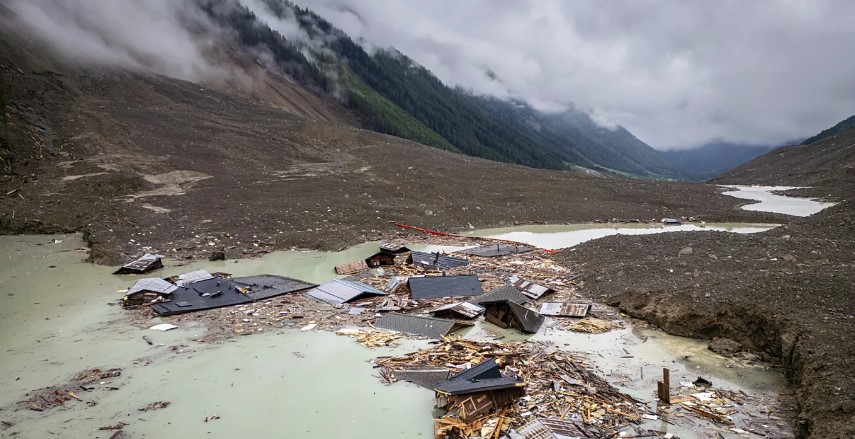
Climate-related disasters were widespread throughout the year. Severe flooding and landslides affected countries such as Mexico and Sri Lanka, while intense rainfall in Southeast Asia caused significant loss of life and displacement. Caribbean nations faced destructive hurricanes, and prolonged drought turned parts of the Middle East into increasingly uninhabitable regions.
Wildfires in Europe released record levels of carbon emissions, and air pollution exceeded safe thresholds across large areas. Meanwhile, temperature extremes continued to break records globally, with Türkiye reaching 50.5°C and prolonged heatwaves affecting multiple regions.
Looking Ahead to 2026
Forecasts suggest that 2026 could rank among the warmest years ever recorded, continuing the recent trend of elevated global temperatures. Scientists warn that without stronger and more coordinated policy action, current trajectories could lead to approximately 2.6°C of warming by the end of the century.
At the same time, new international initiatives are emerging. A major conference on transitioning away from fossil fuels is set to take place in Colombia, aiming to accelerate policy shifts toward cleaner energy systems.