
Cold Snap in the US Sparks Climate Debate — But Scientists Say It Doesn’t Disprove Global Warming
A severe winter storm sweeping across much of the United States has reignited political debate over climate change, after former President Donald Trump questioned global warming amid record cold conditions.
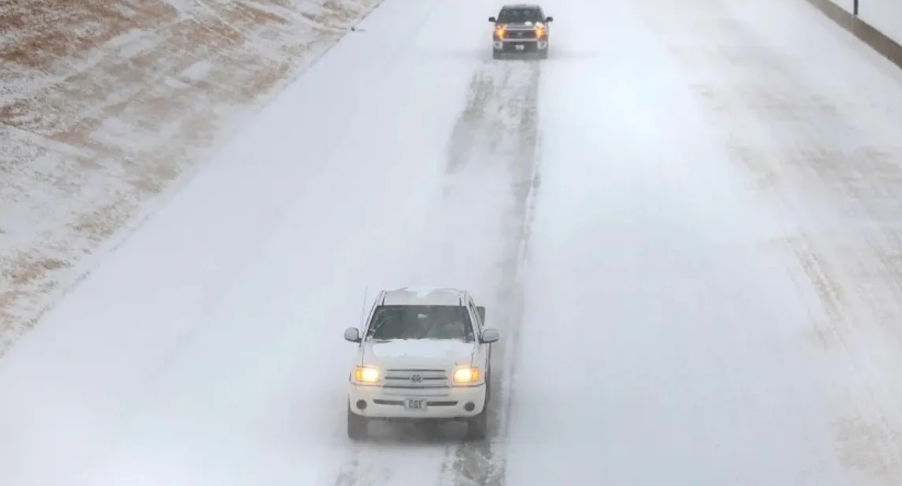
Posting on social media, Trump pointed to an incoming cold wave expected to affect dozens of states, asking: “Whatever happened to global warming?” His remarks came as millions of Americans faced dangerous ice storms, heavy snowfall, and widespread travel disruptions.
Extreme Cold Across the US
The storm system has impacted a vast region stretching from the Southwest to the East Coast, with freezing rain, snow, and strong winds causing power outages and infrastructure damage. Major cities such as Washington, D.C., New York, and Boston have experienced significant disruptions, while airlines have cancelled thousands of flights.
Roughly 160 million people—nearly half the US population—have been placed under weather warnings related to the storm.
What’s Causing the Cold Wave?
Meteorologists explain that the event is driven by a surge of Arctic air moving southward and colliding with warmer, moisture-rich air over the United States. This interaction creates ideal conditions for heavy snow and ice.
A key factor is the “polar vortex,” a large-scale system of cold air and strong winds that typically remains confined to the Arctic. When this system weakens or becomes unstable, it can allow frigid air to spill into lower latitudes.
Climate Change May Be Part of the Puzzle
Scientists say that while cold snaps are natural weather events, climate change may influence their frequency and intensity. The Arctic is warming nearly four times faster than the global average, which can disrupt the stability of the polar vortex.
As sea ice declines and temperature contrasts shift, these disruptions may increase the likelihood of extreme cold outbreaks in regions that are not typically exposed to such conditions.
Weather vs Climate: A Key Distinction
Experts emphasize that short-term weather events—such as a cold wave—should not be confused with long-term climate trends.
Climate change refers to shifts in average global temperatures over decades, not isolated events. While cold weather still occurs, the overall trend remains one of warming.
Data shows that recent years rank among the warmest on record globally, and even in the United States, winters have become milder on average over the past century.
A Warming World with More Extremes
Research indicates that while cold extremes have not disappeared, they are becoming less frequent overall. At the same time, heat extremes are increasing more rapidly.
Some studies also show that even the coldest days today are warmer than they were in previous decades, reflecting a broader shift in baseline temperatures.
The Bigger Picture
Scientists broadly agree that climate change does not eliminate cold weather—but it can alter atmospheric patterns in ways that make extreme events more unpredictable.
The current US cold wave, rather than disproving global warming, is increasingly viewed as part of a more complex and volatile climate system shaped by rising global temperatures.