
Data Center Emissions Likely 662% Higher Than Big Tech Claims: Can the Ruse Continue?
Recent revelations suggest that the greenhouse gas emissions from the in-house data centers of major tech companies like Google, Microsoft, Meta, and Apple could be vastly underreported—by as much as 662%.
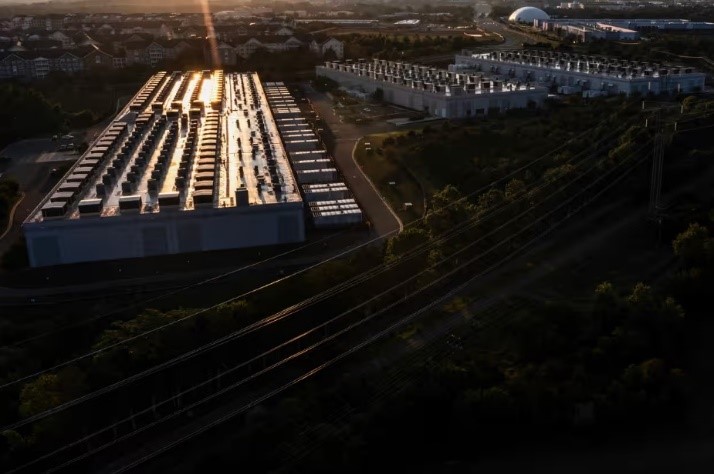
This discrepancy, discovered through a Guardian analysis, indicates that the real emissions from 2020 to 2022 are 7.62 times higher than what these companies officially reported.
The role of data centers in the carbon footprint of the tech industry is enormous. In 2022, data centers accounted for approximately 1% to 1.5% of global electricity consumption, according to the International Energy Agency (IEA). With the explosive growth of artificial intelligence (AI) applications, including energy-hungry models like ChatGPT, data center power demand is expected to grow by 160% by 2030. Goldman Sachs estimates that processing a ChatGPT query requires almost ten times the electricity needed for a simple Google search, demonstrating AI's impact on energy consumption.
Amazon, notably excluded from the 662% calculation due to its complex business model, remains the largest emitter among the big five tech companies, with its 2022 emissions dwarfing those of Apple, the next largest emitter. Despite all five companies claiming strides toward carbon neutrality, questions about creative carbon accounting practices have emerged, especially as energy demands rise.
The Role of "Creative Accounting"
The key tool in what critics call "creative accounting" is the use of Renewable Energy Certificates (RECs). These certificates allow companies to claim they are purchasing renewable energy, even if the energy itself is generated far from where the data centers operate. Official emissions figures—called "market-based" emissions—are calculated based on the purchase of RECs, but "location-based" emissions, which account for the actual emissions produced where the energy is consumed, paint a much grimmer picture.
For instance, if the emissions of the five tech giants were calculated based on location-based metrics alone, they would collectively rank as the 33rd highest-emitting country globally, between the Philippines and Algeria. Many industry experts, like Jay Dietrich of the Uptime Institute, argue that location-based metrics give a more honest reflection of emissions.
Emissions First Partnership vs. 24/7 Carbon-Free Energy
This discrepancy has fueled a growing debate within the industry. Two factions have emerged: one, led by Amazon and Meta, wants to maintain the use of RECs for carbon accounting regardless of geographic origin. The other, headed by Google and Microsoft, advocates for more stringent standards. Google has set a goal to run all its facilities on renewable energy 24/7 by 2030, while Microsoft’s goal is for its data centers to use 100% carbon-free energy by 2030.
While Google and Microsoft are pushing for tighter regulations, they still rely on RECs to some extent. Google, however, has phased out the use of low-quality, unbundled RECs, and Microsoft plans to follow suit by 2030. Both companies report some of their location-based emissions, unlike many of their peers.
The True Emissions of Data Centers
When examining the emissions from data centers specifically, the gaps between official (market-based) and actual (location-based) emissions are staggering. In 2022, Meta reported 273 metric tons of CO2 equivalent for its data centers, but using location-based metrics, that figure jumps to over 3.8 million metric tons—a 19,000-fold increase. Similarly, Microsoft's official data center emissions for 2022 were reported at 280,782 metric tons, but in reality, the location-based emissions were 6.1 million metric tons.
The trend holds true for Google and Apple, whose actual data center emissions are likely similarly understated. For the period from 2020 to 2022, the real emissions from their combined in-house data centers were at least 275% higher than reported.
The Challenge of Third-Party Data Centers
In addition to in-house data centers, tech companies also rent large portions of data center capacity from third-party operators, which introduces further emissions complexities. These emissions fall under "scope 3" emissions—those not directly produced by a company but that occur in its value chain. While scope 3 emissions can include everything from employee commuting to hardware manufacturing, they also cover third-party data center operations.
Accounting for these emissions is difficult because of a lack of standardization. Some third-party operators report their emissions under their own scope 2 figures, while others expect tenants like big tech companies to report them under their scope 3 emissions. This patchwork approach to accounting means that the true emissions of third-party data centers are often obscured.
The Future of Data Center Emissions
As AI becomes increasingly integrated into tech company operations, the demand for energy—and thus emissions—is expected to skyrocket. Industry leaders warn that the power grids supplying these data centers may not be able to keep up with the demand, further complicating the path toward carbon neutrality.
Google and Microsoft have already pointed to AI as the reason for their recent upticks in market-based emissions. The rapid growth of AI models like ChatGPT requires vastly more energy than typical cloud-based applications, and some experts predict that the data center sector may run out of available power within two years.
Despite tech companies’ public commitments to reducing emissions, the discrepancies between market-based and location-based emissions suggest a growing rift between their PR-driven claims and the realities on the ground. With AI’s expansion accelerating and renewable energy capacity struggling to keep pace, it remains unclear whether these companies can truly reduce their carbon footprints or if they will continue to rely on creative accounting to obscure their true environmental impact.