
Europe Warms Faster Than Any Other Continent — But Are Its Cities Prepared?
As Europe experiences faster warming than any other region globally, new research suggests that cities—despite being on the front line of climate impacts—are struggling to keep pace with the scale of the threat.
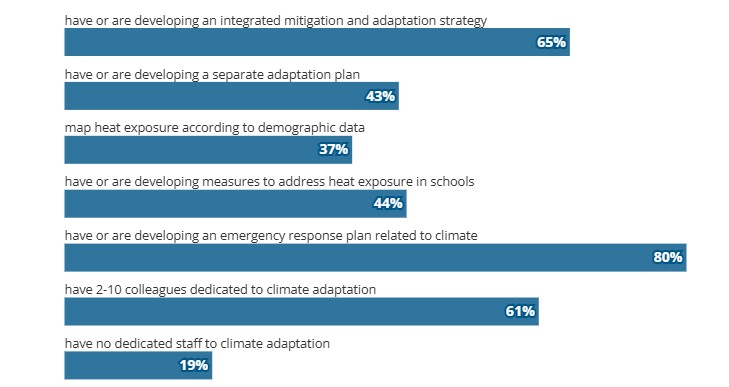
A recent Eurocities Pulse survey indicates that while awareness of climate risks is high among local leaders, the capacity to respond remains uneven and, in some cases, insufficient.
Cities at the Centre of the Climate Crisis
With more than 75% of Europeans living in urban areas, cities are increasingly exposed to the impacts of climate change. Heatwaves, floods, and droughts have emerged as the most pressing risks, placing pressure on infrastructure, public health systems, and local economies.
According to the European Environment Agency, these threats are expected to intensify, reinforcing the urgency for cities to adapt quickly and effectively.
Progress in Planning — But Gaps Remain
The survey, which covered 54 cities across 17 European countries, found that many municipalities are taking steps to prepare. Around 80% of cities have developed—or are in the process of developing—climate-related emergency response plans.
Similarly, nearly 78% are implementing early warning systems to alert residents to extreme weather risks. Efforts are also underway to strengthen infrastructure, with over 80% of cities introducing or planning building regulations aimed at improving climate resilience.
However, progress is uneven. Only just over half of cities conduct regular climate risk assessments, and a notable share still allows development in flood-prone areas—highlighting ongoing vulnerabilities.
Limited Resources Slow Adaptation
One of the most significant barriers to effective climate action at the local level is capacity. While a majority of cities have small teams dedicated to climate adaptation, nearly one in five lacks any dedicated staff altogether.
Funding constraints, limited human resources, and weak coordination between institutions are cited as the main obstacles to scaling up resilience efforts.
Municipal budgets and European Union funding remain the primary sources of financing, but many city leaders argue that these are not sufficient to meet the growing scale of climate risks.
A Call for Stronger Support
City officials warn that without greater national and EU-level support, local governments will struggle to protect communities and infrastructure from escalating climate threats.
Experts emphasize that building resilient cities will require sustained investment, stronger institutional coordination, and long-term planning aligned with increasingly severe climate scenarios.
A Critical Test for Urban Europe
The findings highlight a growing mismatch: while climate risks are accelerating, the systems designed to manage them are not evolving at the same pace.
As Europe continues to warm, the readiness of its cities will play a decisive role in determining how well societies can withstand—and adapt to—the impacts of climate change.