
European Aid Cuts Raise Concerns Over Future of Global Climate Funding
A wave of foreign aid reductions across several Western European countries is raising alarm about the potential impact on global climate finance, particularly for vulnerable nations that rely heavily on external support.
In recent months, countries including the United Kingdom, Germany, France, the Netherlands, Switzerland, Belgium, and Finland have significantly reduced their development assistance budgets. The trend reflects shifting political priorities, mounting economic pressures, and a growing emphasis on domestic spending—especially in areas such as defence and economic recovery.
Foreign aid is typically measured through Official Development Assistance (ODA), with the Organisation for Economic Co-operation and Development recommending that wealthier nations allocate 0.7 percent of their gross national income to such support. However, several countries are moving further away from this benchmark. Belgium plans to cut aid by 25 percent over five years, while the Netherlands and France are reducing their budgets by 30 percent and 37 percent respectively.
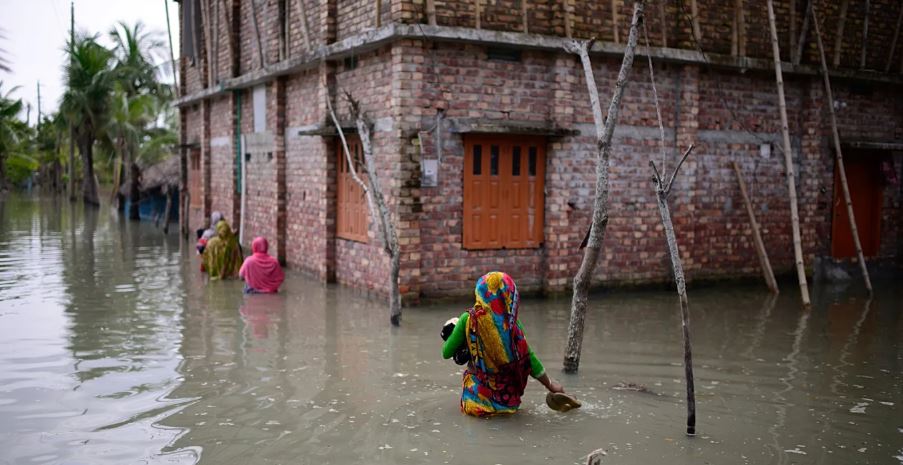
Experts warn that these reductions could have serious consequences for developing nations, including countries like Tanzania, Bangladesh, and Zambia, which depend on international funding for development and climate resilience efforts.
Shifting Priorities Behind the Cuts
The reduction in aid spending is being driven by a combination of political and economic factors. The rise of right-leaning political movements in countries such as Finland and Sweden has influenced policy decisions, while geopolitical tensions—including the war in Ukraine and concerns over global trade—have pushed governments to prioritise defence budgets.
In the UK, Prime Minister Keir Starmer recently announced plans to reduce aid spending from 0.5 percent of GNI to 0.3 percent by 2027, marking one of the lowest levels in the country’s history. At the same time, defence spending is set to increase to 2.5 percent of GDP.
France, facing fiscal challenges and political instability, has also scaled back its aid commitments, amid criticism from some political factions that such spending is not delivering sufficient domestic benefits.
The Netherlands has taken a more strategic approach, integrating development assistance with national priorities such as trade, migration, and economic policy. Funding will increasingly be directed toward areas that align with domestic interests, including food security, water management, and healthcare.
Finland has adopted a similar stance, while Sweden is reallocating resources toward internal priorities like security and welfare.
Risks to Global Climate Goals
Analysts caution that this inward shift risks undermining international climate efforts. At COP29, developed countries committed to mobilising at least $300 billion annually in climate finance for developing nations by 2035, with a broader goal of reaching $1.3 trillion.
However, shrinking aid budgets could make these targets significantly harder to achieve. Although climate finance is theoretically meant to be additional to traditional development aid, in practice the two are often intertwined. Many development projects deliver climate-related benefits, making it difficult to maintain clear budget separations.
In some cases, countries meet climate finance commitments by reclassifying existing aid rather than providing new funding. Data from 2022 shows that a substantial portion of reported climate finance increases came from already allocated development funds.
Only a small number of countries, such as New Zealand and Luxembourg, consistently maintain a clear distinction between climate finance and general aid.
Sarah Hearn, a former UK aid official, said that while some governments—including the UK and Sweden—have reiterated their commitment to climate finance targets, the broader outlook remains uncertain. She noted that the Netherlands plans to reduce climate funding in line with its “national interest” approach, while Switzerland has already implemented cuts and France is reassessing its priorities.
Germany, which reduced its climate finance contribution in recent years, has nevertheless pledged additional funding at COP29, signalling mixed signals across the region.
Impact on Vulnerable Nations
Reduced aid flows could have far-reaching consequences for countries in the Global South, where climate vulnerability and economic challenges often intersect.
Development funding supports a wide range of initiatives, including infrastructure, healthcare, poverty alleviation, and climate adaptation. Experts warn that cuts could weaken efforts to prepare for and respond to climate-related disasters.
“Climate impacts do not stop at national borders,” said Carsten Brinkschulte, CEO of wildfire technology firm Dryad Networks. He argued that reducing investment in climate resilience is both short-sighted and economically inefficient, as preventative measures are often far less costly than disaster response.
Academic experts also stress that climate finance plays a critical role not only in reducing emissions but also in helping communities adapt to changing conditions. Without sufficient support, vulnerable countries may face increased exposure to extreme weather, economic instability, and long-term development setbacks.
Human rights advocates have also voiced concern, warning that cuts to aid could exacerbate inequality and disproportionately affect women and marginalised groups, particularly in regions already experiencing conflict and displacement.
In addition, reduced funding may limit access to climate-related technologies, which are essential for managing risks such as floods, droughts, and wildfires.
Calls for a Strategic Approach
Rather than reducing aid outright, some experts suggest that governments should focus on improving how funds are allocated. This could include prioritising high-impact projects, increasing efficiency, and working more closely with international financial institutions.
Others advocate reframing development assistance as a long-term investment rather than a short-term expense. Proponents argue that spending on climate resilience today can reduce future costs связан with emergencies, migration pressures, and economic disruption.
Redirecting subsidies away from fossil fuels has also been proposed as a potential source of additional funding without increasing overall budget strain.
As European nations reassess their spending priorities, the challenge will be balancing domestic demands with global responsibilities—particularly at a time when climate risks continue to intensify worldwide.