
High Court Blocks Cumbria Plan for UK’s First New Deep Coalmine in 30 Years
The UK’s high court has blocked a controversial plan to build the nation’s first new deep coalmine in 30 years, dealing a significant blow to fossil fuel development and marking a major victory for environmental campaigners.
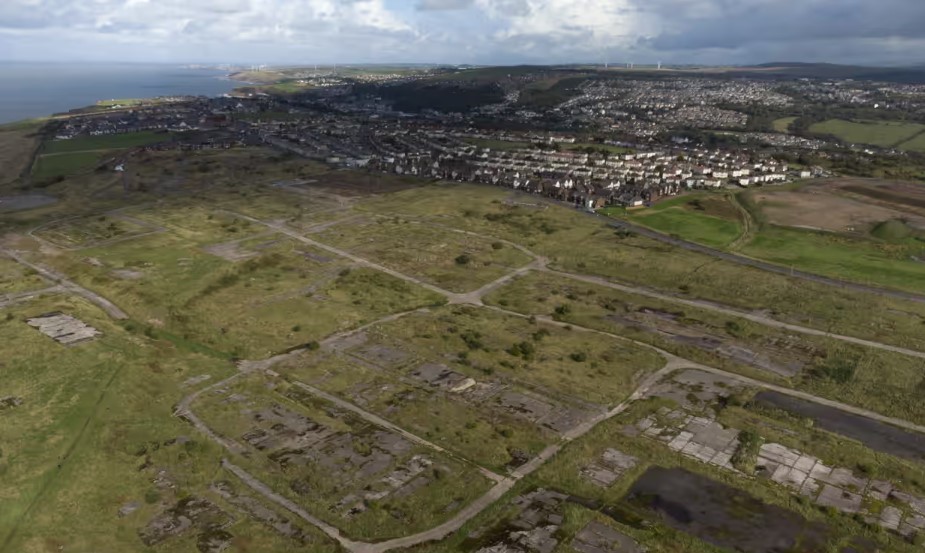
The proposed mine, set to be located in Whitehaven, Cumbria, was halted after a legal challenge spearheaded by Friends of the Earth, who successfully argued that the approval process was fundamentally flawed and failed to account for the full climate impact of the project.
On Friday morning, Justice Holgate ruled against West Cumbria Mining (WCM), the company behind the project, stating that the plan could not proceed under its current legal framework. The ruling follows a landmark supreme court decision earlier this year, which established that the climate impacts of burning fossil fuels, including coal, oil, and gas, must be considered when deciding whether to grant planning permission for such projects. This case was the first fossil fuel development to be decided following the Horse Hill oil drilling case in Surrey, which quashed planning permission for a similar project.
Central to the court’s decision was the argument that Michael Gove, the former Secretary of State for Levelling Up, Housing and Communities, had acted unlawfully when he accepted West Cumbria Mining’s claim that the Whitehaven coalmine would be “net zero.” The company based this claim on the use of international carbon credits, which it argued would offset the emissions from the mine. However, UK government policy explicitly states that international carbon offsets cannot be relied upon to meet the country’s legally binding carbon budgets, as established under the Climate Change Act of 2008.
The Labour government, which assumed office earlier this year, withdrew its support for the mine as part of the legal proceedings. Lawyers representing Angela Rayner, the current Secretary of State for Housing, Communities, and Local Government, admitted there had been a “significant error in law” when planning permission was granted in December 2022. As a result, the government abandoned its defence in the legal challenge mounted by Friends of the Earth and South Lakes Action on Climate Change, while West Cumbria Mining continued to argue in favour of the original decision.
The environmental case against the mine rested heavily on the projected emissions from the burning of the coal extracted. Although the developer did not include these downstream emissions in their climate assessment, estimates suggest that the total lifetime emissions from the Whitehaven mine would exceed 220 million tonnes of CO2 equivalent—an amount greater than half of the UK’s total emissions in 2022. Lawyers for Friends of the Earth successfully contended that the climate impact of burning the coal should have been factored into the planning decision from the outset.
Niall Toru, a senior lawyer for Friends of the Earth, hailed the court’s ruling as a “huge victory” for the environment, emphasizing that the project would have been disastrous for the climate and completely unnecessary. He argued that the coalmine was not needed, given the UK’s declining reliance on coal, and that its approval harmed the country’s international reputation as a leader in climate action. Toru also noted that the ruling could have international ramifications, as many fossil fuel projects around the world are facing legal challenges based on similar arguments.
The ruling does not completely end the possibility of the mine being built but forces the government to reconsider the planning application with a new focus on the project’s full climate impact. Angela Rayner will now have the option to call for additional evidence or even reopen the planning inquiry to reassess the case. Alternatively, West Cumbria Mining could choose to revise and resubmit its application, though any new proposal would likely face significant scrutiny.
Dr. Doug Parr, Greenpeace UK’s chief scientist, expressed hope that the ruling would be the final chapter in the UK’s history with coalmining. He stated that coalmining “belongs in the past” and called on the government to ensure that communities across the country are not forced to choose between high-carbon jobs and no jobs. Parr’s comments reflect growing concerns about the UK’s ability to transition to a low-carbon economy while ensuring that regions reliant on high-emission industries are supported with green jobs and sustainable development.
The Whitehaven coalmine project has been controversial from the start. Supporters of the mine argued that it would create much-needed jobs in the region and provide a domestic source of coal for the UK’s steel industry. However, opponents highlighted that the UK is committed to phasing out coal as part of its climate targets, and that new investments in coal infrastructure contradict the country’s ambitions to achieve net-zero emissions by 2050.
This high court ruling follows years of protests and legal challenges against the project, and it sets a crucial precedent for future fossil fuel developments in the UK. The decision reinforces the need for the government to align planning policies with its climate commitments, taking into account the full lifecycle emissions of fossil fuel projects, including the emissions from burning extracted resources. With the global climate crisis intensifying, the ruling signals a strong stance against new fossil fuel infrastructure and underscores the importance of prioritizing climate action over short-term economic gains.