
Is Brazil’s Lula a Climate Leader?
Brazilian President Luiz Inácio Lula da Silva has positioned himself as a champion of the climate crisis, but his ability to deliver on his green agenda has been met with skepticism.
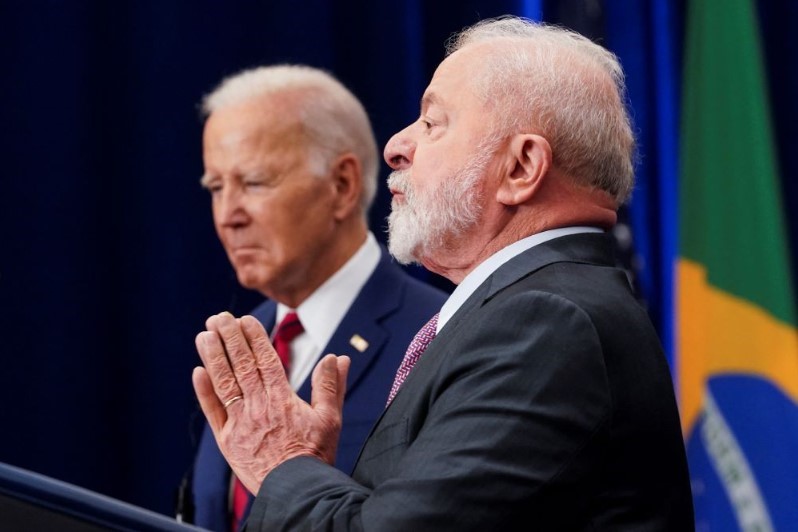
Lula, who narrowly won the 2022 election, was seen as a savior after four years of environmental degradation under far-right leader Jair Bolsonaro. His return was a beacon of hope for environmentalists, as deforestation in the Amazon had skyrocketed by 60% during Bolsonaro's tenure, making Brazil a global climate pariah.
Lula, now more environmentally focused than during his previous administrations, promised ambitious reforms. He re-enacted the Amazon Deforestation Control Plan, committed to ending deforestation by 2030, and took significant steps like giving Brazil's Indigenous population a seat in his cabinet. His efforts appeared to bear fruit: Amazon deforestation dropped by 22% in 2023, with further reductions expected in 2024.
The Political Landscape
However, Lula’s path has not been smooth. Brazil’s Congress, dominated by right-wing parties and the agribusiness lobby, has posed significant obstacles to his climate agenda. The rural caucus, emboldened during Bolsonaro’s administration, has used environmental protections as bargaining chips. Lula’s government has faced an onslaught of anti-environmental bills, and his administration has struggled to push back effectively. As of now, more anti-environmental legislation has advanced since 2023 than during Bolsonaro's entire term.
In this context, Lula’s approval ratings have suffered, despite a generally healthy economy. Inflation is under control, joblessness is at its lowest since 2015, and wages have improved. Yet, the perceived lack of transformative change has weakened his government, making it even more difficult to enact progressive policies.
Contradictory Actions
Complicating Lula’s environmental legacy are his controversial decisions regarding fossil fuels. Despite his climate commitments, Lula is determined to make Brazil the world’s fourth-largest oil producer, up from its current ninth position. His administration has opened new oil exploration sites, including in sensitive areas of the Amazon. Additionally, Lula supports a highly controversial road project that would cut through the rainforest, potentially leading to massive deforestation and an 8-billion-ton increase in emissions by 2050.
These moves have alienated many environmentalists. While his government includes climate advocates like Finance Minister Fernando Haddad and Environment Minister Marina Silva, they often find themselves isolated within Lula’s Workers’ Party, which has deep ties to Brazil’s traditional development model, reliant on extractive industries.
The International Stage
Internationally, Lula has made symbolic gestures, such as offering Brazil to host the 2025 UN climate conference (COP30) in Belém, in the heart of the Amazon. This has raised hopes that Lula could still emerge as a global climate leader. However, critics argue that Lula's international focus has been misdirected, particularly on non-climate issues like the Ukraine conflict, which has left Brazil’s climate agenda underdeveloped on the global stage.
COP30 presents a unique opportunity for Lula to reshape his climate legacy and take meaningful leadership in the fight against global warming. But time is running out. If Brazil is to lead by example, Lula must overcome the political challenges at home and align his actions more closely with his environmental rhetoric. Only then can he fulfill the promise of his presidency as a leader in the global fight against climate change.