
Nearly Half of Record-Breaking Weather Events Last Year Occurred in Europe, WMO Reports
A new report from the World Meteorological Organization (WMO) has revealed that almost half of the unprecedented weather events recorded in 2024 took place in Europe, highlighting the growing severity of the global climate crisis.
According to the WMO’s State of the Global Climate report, 2024 marked the warmest year in 175 years of recorded observations. Atmospheric carbon dioxide levels have now reached their highest point in the past 800,000 years, while each of the last ten years ranks among the ten hottest ever documented.
The report also indicates that 2024 was likely the first full calendar year in which global temperatures exceeded 1.5°C above pre-industrial levels. However, the WMO clarified that the long-term threshold set by the Paris Agreement—measured over several decades—has not yet been formally surpassed. Despite this, scientists warn that the planet is already experiencing rapidly escalating climate impacts, many of which may be irreversible for centuries or even millennia.
“The latest planetary health check shows that Earth is seriously unwell,” said Professor Stephen Belcher, Chief Scientist at the UK Met Office. He emphasized that without urgent and sustained action, extreme weather events such as heatwaves, droughts, and floods will continue to intensify.
Extreme Weather Leaves Global Impact
The report documented at least 152 unprecedented extreme weather events worldwide in 2024. These included tropical cyclones, floods, and droughts, which triggered the highest level of climate-related displacement in the past 16 years. In addition to forcing people from their homes, these disasters worsened food insecurity and caused significant economic damage.
WMO Secretary-General Celeste Saulo noted that ocean temperatures and sea levels continued to rise, while glaciers and polar ice are melting at an alarming pace. Antarctic sea ice dropped to its second-lowest extent ever recorded.
“Extreme weather continues to have devastating consequences across the globe,” Saulo said.
Europe Faces Disproportionate Share
Europe experienced a particularly high number of extreme events. The WMO recorded 114 unusual and 75 unprecedented incidents across the continent, resulting in 111 deaths, 5,600 injuries, and the displacement of 26,800 people. Of these, unprecedented events alone accounted for 86 deaths and nearly 25,000 displaced individuals.
Among the most notable events were 34 heatwaves, stretching from Norway—where temperatures exceeded 30°C for the first time in September—to Bulgaria, which endured its longest recorded summer heat period since 1932.
Heavy rainfall events also played a significant role, with 21 unprecedented wet periods recorded, many of them in Denmark. In Italy’s Lombardy region, February and March brought the highest two-month rainfall totals ever observed.
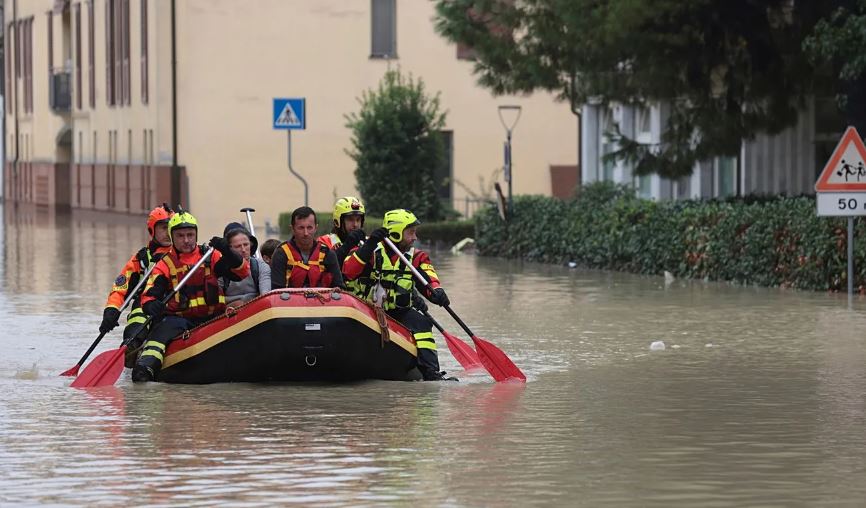
Flooding proved equally destructive, with nine major unprecedented flood events reported across Europe, leading to 32 deaths. Italy was particularly affected, experiencing four such floods, including three in its northern regions during September and October.
In addition, countries such as Poland, Estonia, and Denmark suffered severe drought conditions, resulting in 4,800 displacements and four fatalities.
Global Storms Intensify with Warming Climate
Beyond Europe, climate-driven disasters struck multiple regions. Typhoon Yagi caused widespread damage across Vietnam, the Philippines, and southern China. In the United States, Hurricanes Helene and Milton made landfall in Florida, resulting in economic losses totaling tens of billions of dollars. Helene alone was linked to over 200 deaths due to severe flooding—the deadliest mainland U.S. hurricane since Hurricane Katrina in 2005.
Meanwhile, in December, Tropical Cyclone Chido hit parts of southeastern Africa, including Mozambique, Malawi, and Mayotte. With wind speeds exceeding 200 km/h, the storm destroyed entire neighborhoods, disrupted infrastructure, and displaced approximately 100,000 people in Mozambique alone.
Call for Urgent Investment in Climate Services
The WMO stressed that greater investment in weather forecasting, water management, and climate services is essential to mitigate future risks and build resilience. Efforts to expand early warning systems are underway, but significant gaps remain.
“Only about half of all countries currently have adequate early warning systems in place,” Saulo stated. “While progress is being made, we must act faster and go further to protect communities from increasingly severe climate threats.”