
Rare Antarctic Warming Event Could Disrupt Australia’s Weather Patterns
A rare and extreme atmospheric event over Antarctica has recorded a rapid temperature spike of around 50°C in the stratosphere, raising concerns about potential shifts in weather patterns across Australia in the coming months.
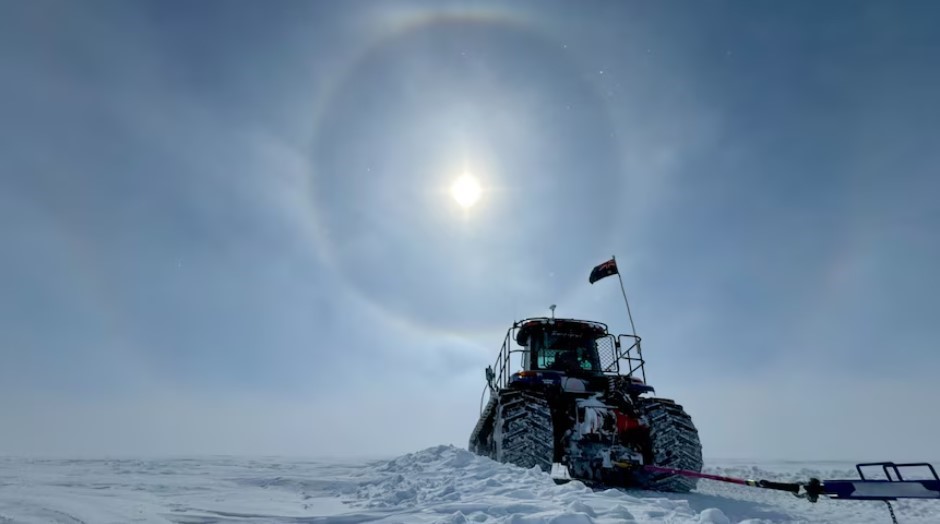
The phenomenon, known as a sudden stratospheric warming (SSW), occurred more than 20 kilometres above Antarctica’s east coast in July. Unlike in the Northern Hemisphere—where such events happen roughly every two years—SSWs are extremely rare in the Southern Hemisphere and have never before been observed during winter.
Meteorologists explain that SSWs involve a rapid warming of the polar stratosphere, which weakens the polar vortex and disrupts the strong westerly winds that typically circle the Antarctic region. This disruption can cascade downward into the lower atmosphere, influencing weather systems for weeks or even months.
According to the Australian Bureau of Meteorology, only two Southern Hemisphere SSW events have been recorded in the past 65 years. The current event is considered the strongest winter occurrence on record for the region.
The warming is believed to have been triggered by persistent high-pressure systems near the Amundsen Sea earlier in the season. As the polar vortex weakens, scientists expect a shift toward a negative Southern Annular Mode (SAM), a pattern that can push westerly winds northward.
Such shifts often bring increased storms, cold fronts, and heavy snowfall to southern parts of Australia, including Western Australia, South Australia, Victoria, and Tasmania. Meanwhile, eastern regions such as Sydney and Brisbane may experience warmer and drier conditions.
The effects are already being observed, with recent weather systems bringing strong winds and snow to southeastern Australia, while parts of the east coast have recorded unusually warm winter temperatures.
Experts note that a similar Antarctic atmospheric disruption in 2019 contributed to extreme fire conditions during Australia’s Black Summer bushfires, though current conditions are not expected to produce similar outcomes due to seasonal differences.
Forecast models suggest the stratospheric warming influence could persist into August, potentially leading to continued stormy weather in southern regions and further atmospheric instability.
However, scientists caution that long-range forecasts remain uncertain, as atmospheric conditions could still shift in unexpected ways.