
Record US Heat Dome Signals a New Era of Extreme Weather, Scientists Warn
A record-breaking heatwave sweeping across the US Southwest has been identified as a stark example of how climate change is pushing weather patterns beyond historical limits, with scientists warning that such extremes are becoming more frequent, intense, and unpredictable.
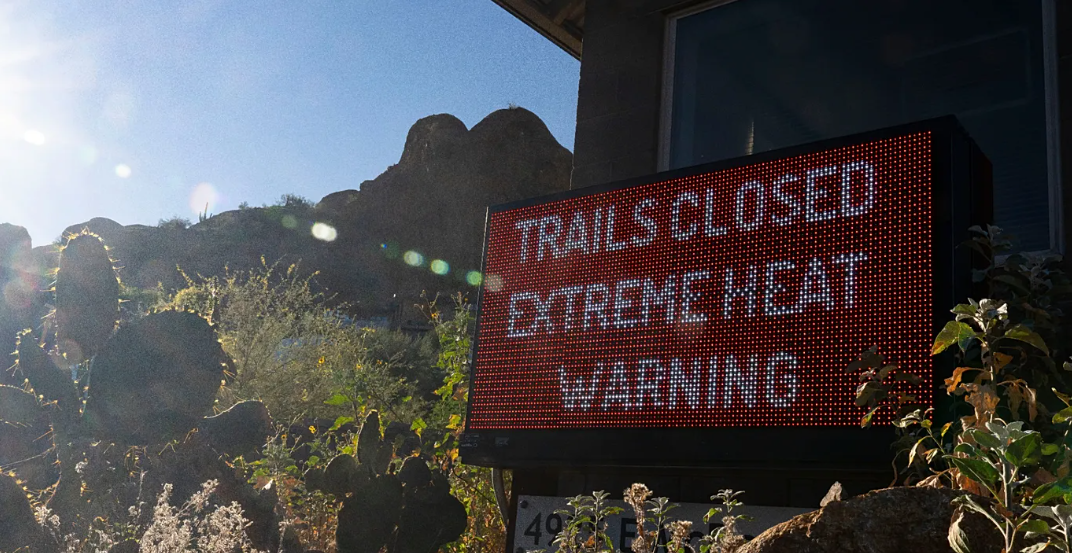
Temperatures in parts of Arizona and California exceeded 43°C in March—shattering previous records and marking the hottest March conditions ever observed in the United States. In one case, a reading of 43.3°C in Arizona set a new national benchmark for the month.
Climate Change Behind “Next-Level” Extremes
Researchers say the scale and timing of this heatwave are highly unusual. While the region is accustomed to extreme summer heat, such temperatures occurring months earlier point to a shifting climate baseline.
A rapid analysis by World Weather Attribution concluded that this event would have been “virtually impossible” without human-induced climate change. The study found that global warming added between 2.6°C and 4°C to the temperatures experienced during the heatwave.
Experts describe this as part of a broader pattern in which previously rare or unprecedented events are becoming increasingly common.
A Surge in Record-Breaking Events
Data shows a clear acceleration in extreme weather across the United States. The country is now recording significantly more high-temperature records than in previous decades, with a sharp increase compared to both the 1970s and the 2010s.
At the same time, the geographic area affected by extreme weather has expanded considerably over recent decades, reflecting a wider shift in climate behavior.
The economic consequences are also mounting. The number and cost of billion-dollar weather disasters have risen dramatically, with recent years seeing far higher losses than in previous decades.
Straining Systems Built for the Past
Experts warn that infrastructure and disaster planning systems are struggling to keep up with these rapidly changing conditions. Many communities were designed based on historical climate patterns, which are no longer reliable guides.
Emergency management officials note that extreme events are increasingly falling outside previously expected ranges, complicating risk assessments and response strategies.
One of the clearest indicators of this shift, according to analysts, is the behavior of insurance companies. As risks become harder to predict, insurers are withdrawing coverage from high-risk areas—signaling a fundamental change in how climate risk is assessed.
A Global Pattern of Intensifying Extremes
The US heatwave is part of a broader global trend. Scientists point to a series of recent “mega-events,” including severe heatwaves in North America, Europe, and Asia, catastrophic floods, prolonged droughts, and increasingly destructive storms.
These events are not isolated incidents but part of a systemic shift driven by rising global temperatures.
A Warning for the Future
Climate scientists emphasize that continued fossil fuel use is pushing temperatures higher and increasing the likelihood of extreme weather events. Each increment of warming raises the probability of severe and potentially dangerous conditions.
The latest heatwave serves as a clear example of how climate change is already reshaping weather patterns—not in the distant future, but in real time.
As one expert noted, what was once considered extraordinary is rapidly becoming the new normal.