
Study Links US Emissions to €1.2 Trillion in Damages Across Europe
Decades of greenhouse gas emissions from the United States have imposed vast economic costs worldwide, with Europe alone suffering losses estimated at over €1.2 trillion, according to new research.
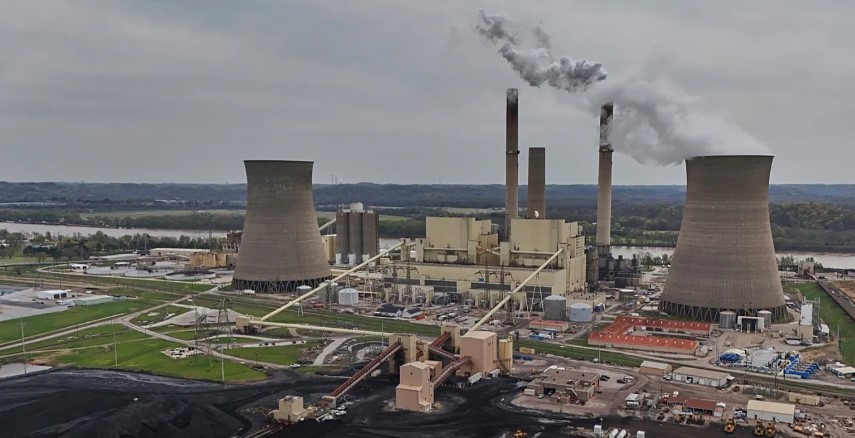
The study, published in Nature and led by Stanford University researchers, calculates that US emissions since 1990 have caused more than $10 trillion (around €8.65 trillion) in global economic damage.
A Global Cost with Uneven Impacts
Because climate change operates as a global externality—where emissions from one country affect the entire planet—the economic consequences are distributed worldwide. While the United States itself has absorbed a significant share of the damage, other regions have also been heavily affected.
Europe accounts for roughly $1.4 trillion (€1.21 trillion) in losses, while countries such as India and Brazil have experienced substantial economic hits, highlighting how climate impacts ripple across borders.
However, researchers note that when measured relative to national income, the burden is far greater for lower-income countries, which are less equipped to absorb such shocks.
Climate Change and Economic Losses
The findings come amid growing concern that traditional economic models underestimate the true cost of climate change. Scientists argue that rising temperatures and increasingly severe weather events are already affecting global productivity and growth.
Between 1980 and 2023, climate- and weather-related disasters caused more than €783 billion in damages within the European Union alone—a figure expected to rise as warming continues.
Corporate Emissions Add to the Toll
The study also examined emissions linked to major fossil fuel producers. It found that emissions associated with oil production from Saudi Aramco between 1988 and 2015 contributed to approximately $3 trillion (€2.6 trillion) in global damages by 2020.
If those emissions persist in the atmosphere through the end of the century, the total economic impact could escalate dramatically—reaching an estimated $64 trillion (€55 trillion).
Researchers caution that these figures are likely conservative, as they do not account for losses beyond GDP, such as environmental degradation, biodiversity loss, or cultural impacts.
A Growing ‘Climate Debt’
To explain the concept of climate damages, researchers compare greenhouse gas emissions to unmanaged waste. Just as dumping garbage imposes costs on others, carbon emissions create long-term economic burdens that have yet to be fully accounted for.
Unlike traditional waste management systems, however, there has been no consistent mechanism to pay for or offset these damages, allowing costs to accumulate over time.
The Urgency of Action
The study underscores the importance of both reducing emissions and developing technologies capable of removing carbon dioxide from the atmosphere.
Timing, researchers warn, is critical. If emissions remain in the atmosphere for decades before being removed, a large portion of their economic damage will already have occurred.
A Warning for the Future
The findings reinforce a broader message: the economic consequences of climate change are not only significant but also accelerating. Without decisive global action, the financial burden—alongside environmental and social costs—will continue to grow.