
UN Chief Urges Leaders to Prioritise Climate and Peace Over Military Spending
As the world entered 2026, United Nations Secretary-General António Guterres issued a stark warning about the growing imbalance between global military spending and investment in climate action and human development.
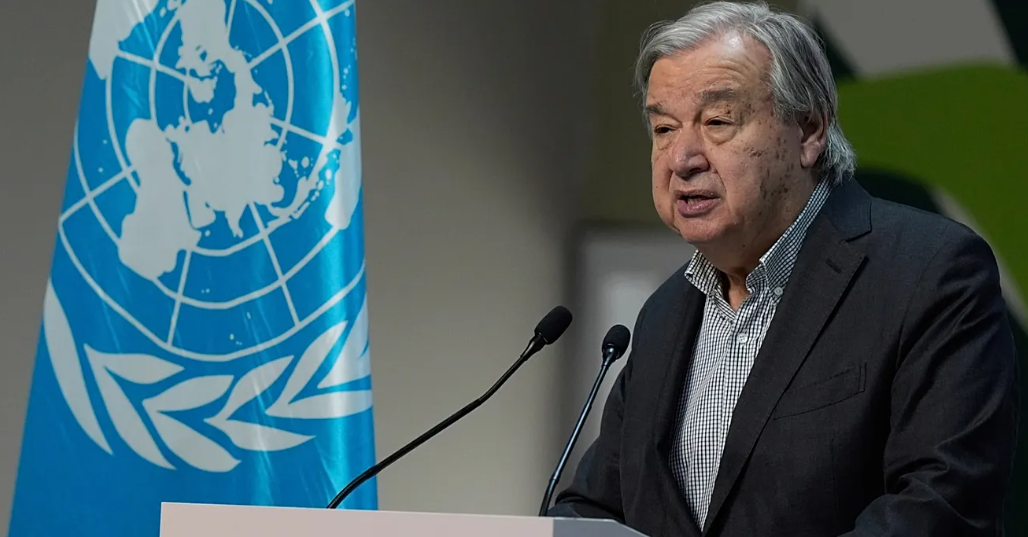
Highlighting rising geopolitical tensions and humanitarian crises, Guterres pointed to a sharp increase in global defence budgets, which reached $2.7 trillion (around €2.3 trillion) last year. Projections suggest this figure could climb to $6.6 trillion by 2035 if current trends continue.
A Call to Redirect Global Priorities
In his New Year message, Guterres urged world leaders to “choose people and planet over pain,” stressing that the resources needed to address climate change and global inequality already exist—but are being allocated elsewhere.
A recent UN report underscores this imbalance, showing that redirecting just 15% of global military spending would be sufficient to cover the annual costs of climate adaptation in developing countries.
Economic and Environmental Trade-Offs
The report also highlights the economic inefficiencies of military expenditure compared to civilian investment. For example, spending $1 billion on defence generates significantly fewer jobs than equivalent investments in sectors such as clean energy, education, or healthcare.
In addition, military spending carries a substantial environmental cost. Each dollar allocated to defence produces more than double the greenhouse gas emissions of a dollar spent in civilian sectors, reinforcing concerns about the climate impact of global militarisation.
The Hidden Emissions of War
Armed conflict is increasingly recognised as a major but often overlooked contributor to climate change. Military operations generate emissions through fuel-intensive equipment, infrastructure destruction, and reconstruction efforts.
Estimates suggest that global military activity accounts for around 5.5% of total greenhouse gas emissions—more than many individual countries. Yet, these emissions are often excluded from international climate reporting frameworks.
Recent conflicts have further illustrated the scale of the issue. War-related emissions can reach levels comparable to those of entire nations, while environmental damage—such as deforestation and ecosystem loss—reduces the planet’s capacity to absorb carbon.
Growing Calls for Accountability
Experts and advocacy groups are calling for greater transparency and accountability regarding the environmental impact of military activities. There is increasing pressure to include military emissions in global climate agreements and to assess the long-term ecological costs of conflict.
In some cases, discussions are emerging around climate reparations—holding parties accountable for environmental damage caused by war.
A Defining Choice for the Future
Guterres’ message reflects a broader challenge facing the international community: balancing security concerns with the urgent need for climate action.
The UN chief’s appeal suggests that addressing climate change, reducing inequality, and promoting peace are deeply interconnected goals—and that meaningful progress will depend on how governments choose to allocate their resources.
As global risks intensify, the question is no longer whether the world can afford to act, but whether it can afford not to.