
US Declares Plastic Pollution a Crisis—but Stops Short of Cutting Production
The White House has officially labeled plastic pollution a “crisis” and unveiled a new national strategy aimed at reducing its environmental and health impacts.
The plan outlines a gradual phase-out of single-use plastics across all US federal operations by 2035.
According to the proposal introduced under Joe Biden’s administration, single-use plastics will first be eliminated from food services, events, and packaging by 2027, before being fully removed from government use within the following decade.
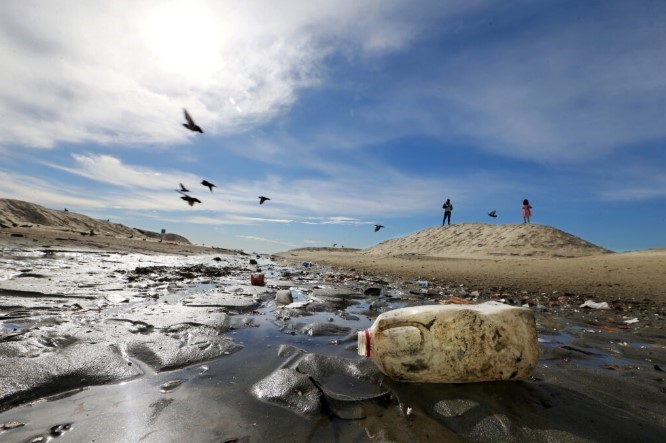
Officials emphasized that plastic production and waste have more than doubled in the past 20 years and could quadruple by 2050 if no action is taken. The strategy highlights how plastic pollution now contaminates nearly every corner of the planet—from oceans and coastlines to rivers—and poses growing risks to human health through microplastics.
Rather than directly limiting plastic production, the plan focuses on reducing pollution through stricter regulation of manufacturing emissions, investment in waste management systems, and support for research into alternative materials. It also aims to use federal purchasing power to discourage the use of disposable plastics.
Environmental groups welcomed the administration’s recognition of the scale of the problem but criticized the lack of firm measures to reduce overall plastic production. Advocates argue that focusing mainly on recycling and waste management does not address the root cause of the crisis.
The strategy also aligns with ongoing international negotiations to establish a global plastics treaty, though the US has faced criticism for opposing production caps in those discussions.
Additional initiatives include federal investments in recycling infrastructure and marine debris cleanup, as well as efforts by the Environmental Protection Agency to regulate harmful chemicals used in plastic manufacturing.
While the plan marks one of the most comprehensive federal approaches to plastic pollution to date, critics say stronger action—particularly limiting production—will be necessary to effectively tackle the growing global crisis.