Newly released figures show that the United States experienced 23 separate weather and climate disasters exceeding $1 billion in damage last year, pushing total losses to $115 billion. The data comes from a newly established national disaster database now maintained outside government, marking an unusual transfer of responsibility from public institutions to the private sector.
The platform enables journalists, researchers and the wider public to monitor the financial impact of extreme events — from wildfires and hurricanes to tornadoes and hailstorms — largely by analysing property damage. It has also become a key reference point for insurers and real estate firms seeking to understand growing climate risks.
Federal tracking of these costly disasters was discontinued in May, prompting the nonprofit behind the new database to recruit the former lead analyst who had overseen the government's program. He brought with him the original methodology, allowing the new system to mirror previous standards and ensure continuity with decades of historical data.
Using this approach, last year ranked among the three most extreme since records began in 1980, both in terms of the number of billion-dollar events and the overall economic toll.
Severe weather alone — including tornadoes and hailstorms — reached a new high, with 21 major incidents recorded. The year also stood out for a billion-dollar drought across western states, driven primarily by extreme heat rather than low rainfall.
Researchers found that the pace of disasters is accelerating. In the 1980s, major events were separated by an average of nearly three months. Over the past decade, that gap has shrunk dramatically, with billion-dollar disasters now occurring roughly every two weeks. Last year, the average interval dropped to just 10 days.
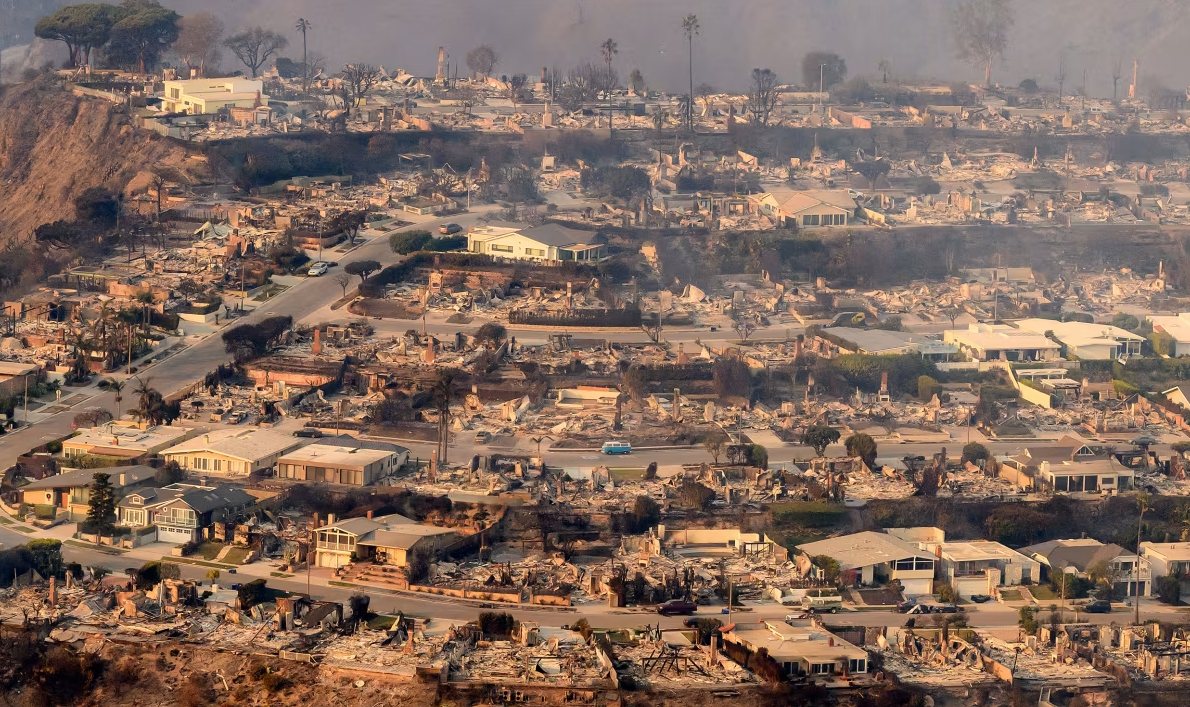
The single most expensive event was a wave of wildfires in the Los Angeles region early in the year, which claimed more than two dozen lives and destroyed over 16,000 homes and businesses. Damages from that catastrophe alone reached $61.2 billion, making it the costliest wildfire episode in US history.
A large tornado outbreak across central states in March ranked second, killing 43 people and causing an estimated $11 billion in losses.
Strikingly, total damages surpassed $100 billion even without a major hurricane making landfall — underscoring how a broader range of climate-driven extremes is now generating enormous costs.
Experts attribute the rising toll to a combination of human-driven climate change, which is intensifying certain weather events, and long-term development patterns that have placed more homes and infrastructure in harm's way.
Looking ahead, the nonprofit plans to expand the database beyond billion-dollar events, potentially capturing smaller disasters and adding new analytical tools — continuing the work once handled by federal agencies, but now carried forward by the private sector.