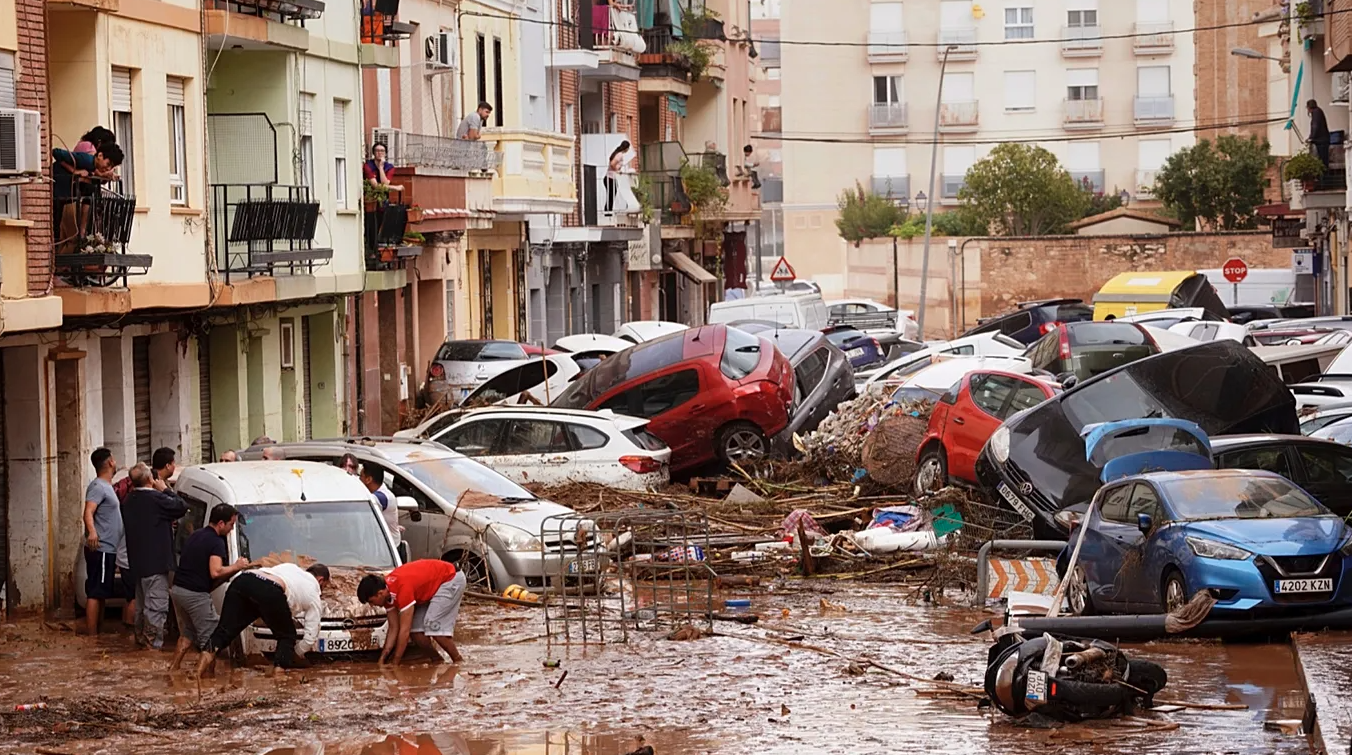
On 29 October 2024, a powerful DANA — a high-altitude cut-off low-pressure system known in Spain as "Depresión Aislada en Niveles Altos" — stalled over Valencia. The phenomenon, which occurs when a mass of cold air detaches from the jet stream and interacts with warm Mediterranean waters, unleashed torrential rainfall across the region.
Within hours, streets were submerged, transport links collapsed and neighbourhoods were transformed into fast-moving waterways. At least 230 people lost their lives, and economic losses were estimated at around €29 billion. The scale of destruction triggered widespread public anger over emergency preparedness and response.
Now, a study published in Nature Communications concludes that the intensity of the rainfall was measurably increased by global warming caused by fossil fuel emissions.
Using advanced climate simulations, researchers compared the actual storm with a counterfactual scenario representing a cooler world unaffected by industrial-era greenhouse gas emissions. Their analysis found that climate change boosted rainfall rates by 21% during a critical six-hour window. The area experiencing more than 180 millimetres of rain expanded by 56%, while total precipitation in the Júcar River basin increased by 19%.
Scientists note that warmer air can hold more moisture — roughly 7% more for every 1°C increase in temperature — creating conditions conducive to heavier downpours. In the months preceding the storm, both the Mediterranean Sea and the North Atlantic recorded exceptionally high surface temperatures, supplying additional water vapour to the atmosphere.
Although it remains uncertain whether climate change will alter how often DANA systems occur, experts say comparing the same storm under different temperature scenarios allows researchers to isolate the effect of warming on rainfall intensity.
Markus Donat, a climate scientist not involved in the study, said such analyses help clarify how rising temperatures can push extreme weather beyond historical thresholds. He described the findings as a major contribution to understanding how heavy rainfall events in a warmer climate can cross from severe to catastrophic.
Strengthening adaptation efforts
Researchers argue the results underscore the urgent need for stronger climate adaptation measures, particularly in the western Mediterranean, where flood risks are expected to rise.
Spain has announced plans to expand its climate resilience strategy. The government intends to establish a nationwide network of cooling shelters in public buildings to protect vulnerable populations from extreme heat, with priority areas including Catalonia, the Basque Country and Murcia.
Additional funding has been earmarked for flood prevention projects in smaller municipalities, alongside €20 million allocated for wildfire prevention following record-breaking blazes that scorched extensive woodland last year.
As Spain continues to recover from one of the deadliest natural disasters in its modern history, the study adds to growing evidence that climate change is not only increasing the likelihood of extreme weather, but also intensifying its consequences — raising pressing questions about preparedness in a rapidly warming world.